Best Travel Insurance Companies in Kenya
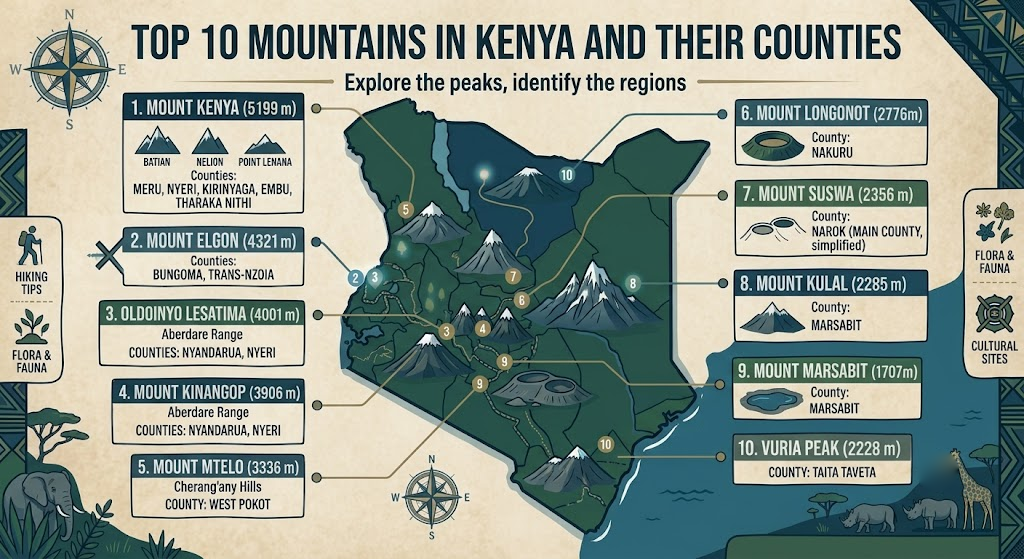
Someone in my building, a guy who does safari logistics for a living, told me a story that stuck with me. A client from Germany got a mild case of altitude sickness on a Mount Kenya trek, needed a helicopter lift down, and the bill came to nearly two million shillings. No insurance. He paid it. Eventually, in installments, over eight months.
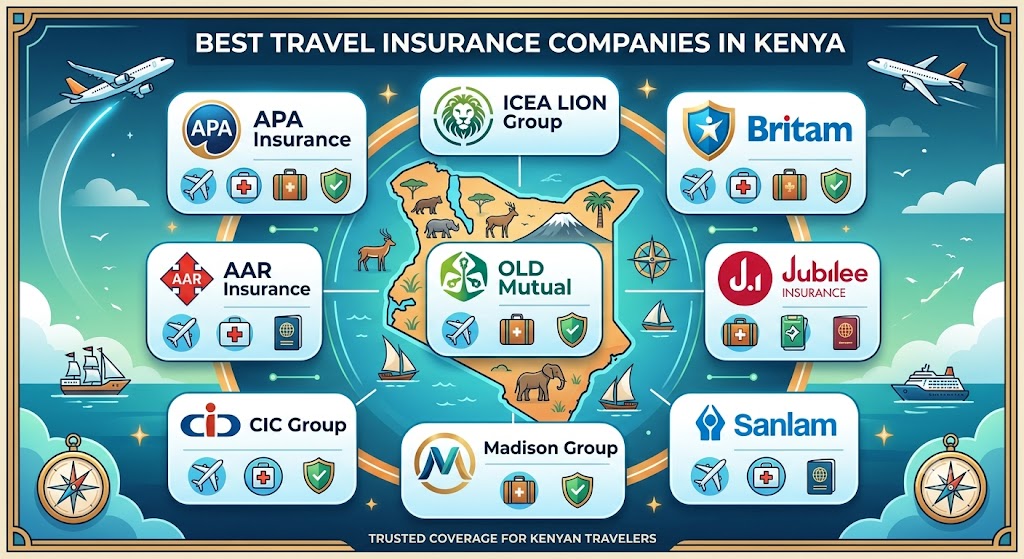
That's the whole argument for travel insurance in Kenya, really. Not the lost luggage, not the delayed flight, though those happen too. It's the evacuation bill that ruins people. And if you're wondering who actually sells the best cover for this kind of thing, the honest answer is that Kenya's market has a handful of serious underwriters worth your attention: APA Insurance, Britam, AAR Insurance, Old Mutual, and Jubilee Insurance. Each has its own texture, its own strengths, and frankly, its own gaps you need to know about before you sign anything.
Which Companies Offer the Best Travel Insurance in Kenya ?
Kenya's insurance sector isn't short on players, but when you filter for who's actually built a travel product that holds up under stress, the list shrinks fast. Consumer sentiment across forums and industry write-ups, including a fairly detailed breakdown from Bowmans on the country's top underwriters, keeps circling back to the same five names. Not because they're flashy, but because their claims desks answer the phone at 2am when someone's stuck in a lodge outside Amboseli with a snake bite.
APA Insurance
APA Insurance Globetrotter's plan gets mentioned constantly, and for good reason. It's built for international travel, Schengen visa applications included, and its medical evacuation and rescue provisions are genuinely competitive. Expect premiums starting around Ksh 1,500 for short regional trips, climbing to Ksh 6,000 or more for a month-long Schengen policy with higher medical caps. The rescue coordination is what people praise most, though digital claims processing still lags behind what you'd get from, say, a European insurer.
Britam
Britam doesn't market itself as a travel specialist first, it's more of a full-spectrum insurer that happens to do travel well. Pricing sits in a similar band to APA, roughly Ksh 1,200 to Ksh 5,500 depending on trip length and destination. What people like is the accessibility, physical branches everywhere, a broad product ecosystem, and staff who can walk you through a policy without the jargon overload some insurers lean on.
AAR Insurance
AAR built its reputation on health, not travel per se, and that shows in how well it handles regional medical coordination. If you're moving between Kenya, Uganda, Tanzania, and Rwanda for work or leisure, AAR's cross-border health-transit integration is arguably the smoothest in the market. Premiums for regional cover start around Ksh 1,000, though international Schengen-grade policies push closer to Ksh 7,000.
Old Mutual
Old Mutual's travel insurance product leans heavily on emergency medical coordination, and the company's broader financial muscle backs it up. Old Mutual Holdings posted a 12.2% revenue growth in its first half financial results, which, cynical as it sounds, actually matters when you're betting on an insurer's ability to pay out a six-figure evacuation claim without dragging its feet. Expect pricing in the Ksh 1,300 to Ksh 6,500 range.
Jubilee Insurance
Jubilee Insurance rounds out the list, less flashy in online chatter but consistently listed among Kenya's licensed and stable underwriting groups. Its travel products cover the basics competently, medical, baggage, cancellation, without much fanfare. Premiums roughly mirror the market average, sitting between Ksh 1,200 and Ksh 5,800.
Insurer | Starting Premium (short trip) | Schengen-Grade Premium | Standout Feature |
|---|---|---|---|
APA Insurance | Ksh 1,500 | Ksh 6,000+ | Globetrotter evacuation cover |
Britam | Ksh 1,200 | Ksh 5,500 | Branch accessibility |
AAR Insurance | Ksh 1,000 | Ksh 7,000 | Regional health-transit network |
Old Mutual | Ksh 1,300 | Ksh 6,500 | Financial stability, evacuation coordination |
Jubilee Insurance | Ksh 1,200 | Ksh 5,800 | Consistent baseline coverage |
Before committing to any of these, it's worth checking their status against the official registry of licensed insurers maintained by Kenya's Insurance Regulatory Authority. Skip this step and you might end up dealing with an intermediary who isn't even authorized to sell you the policy in the first place.
What Does Travel Insurance in Kenya Typically Cover?
Emergency medical treatment
This is the backbone of any travel policy. It covers hospital admission, outpatient treatment, doctor consultations, and prescribed medication while you're away from home. In Kenya specifically, this matters because private hospital care in Nairobi runs expensive, and rural clinics near safari circuits often can't handle serious trauma at all, meaning you'll be transferred, and transfers cost money.
Medical evacuation and repatriation
Here's where the real financial exposure sits. Evacuation from a remote conservancy, whether by road ambulance or air rescue, can run into the hundreds of thousands of shillings depending on distance and urgency. Repatriation, flying someone home for ongoing treatment or, worst case, returning remains, adds another layer of cost most travelers never budget for. A policy without guaranteed evacuation coordination, one that makes you pay upfront and claim reimbursement later, is basically useless in an emergency. You want a provider whose assistance line can dispatch help without a lengthy approval process.
Trip cancellation and interruption
If a key traveler falls sick before departure, or a family emergency forces you to cut the trip short, this cover reimburses non-refundable costs like flights and accommodation deposits. Safari packages often have stricter cancellation terms than standard holiday bookings, so read this section twice.
Lost baggage and travel delays
Smaller in financial stakes but still annoying when it happens. Airlines lose bags, flights get delayed, and this cover reimburses essentials you had to buy while waiting, or compensates for items that never showed up.
How Much Does Travel Insurance Cost in Kenya?
Pricing depends on trip length, destination, age, and whether you're doing anything remotely adventurous. Broadly, short regional trips within East Africa start around Ksh 1,000 to Ksh 2,000. International trips, especially Schengen-bound ones with mandatory minimum medical cover, push premiums to Ksh 5,000 to Ksh 8,000 for a month.
Global benchmarking data is useful context here too. According to aggregate market analysis on Kenya-bound travel, average trip expenditure for international visitors sits around $18,300, with daily premium costs scaling accordingly. That's a steep number, and it explains why insurers price evacuation-heavy policies the way they do, the potential payout liability is genuinely large.
There's also a regulatory layer now baked into pricing for inbound visitors. Kenya introduced a mandatory minimum $50,000 travel health insurance requirement for foreign visitors, detailed in Gazette Notice No. 11492, which translates to roughly Ksh 6.4 million in mandatory cover. Local news outlets have broken down the implementation specifics, and it hasn't been smooth. Tourism stakeholders have raised real concerns, with Nation Media reporting on jitters across the sector over enforcement and transparency. Industry bodies, including positions mapped out in discussions among insurance professionals, have flagged distribution bottlenecks too, meaning the policy is good in theory but messy in rollout.
How Do You Choose the Right Travel Insurance Provider?
Match cover to your destination
A policy built for regional East African travel won't necessarily satisfy Schengen visa requirements, which demand specific minimum coverage amounts and repatriation clauses. Know where you're going before you buy.
Check evacuation and medevac terms
Ask directly, does the policy guarantee air evacuation coordination, or does it require you to pay first and claim later? This single detail separates a policy that saves your trip from one that saves nothing.
Review exclusions and pre-existing conditions
Every policy excludes something. Standard exclusions typically include planned medical tourism, certain pre-existing conditions, and high-risk activities unless specifically added as riders, a pattern explained clearly in Squaremouth's breakdown of standard travel insurance exclusions. If you have a pre-existing condition, ask about waivers explicitly, don't assume silence means coverage.
A quick mental checklist before buying:
Confirm the insurer appears on Kenya's official licensed insurers database
Verify the evacuation clause doesn't require upfront payment
Check if safari or adventure activities need a separate rider
Compare the medical expense cap against realistic evacuation costs, not just hospital bills
Confirm the 24/7 assistance line is actually reachable, test it if you can before departure
Do You Need Special Cover for Safari Trips?
Yes, and this is where a lot of travelers get caught out. Standard travel policies sometimes exclude off-road vehicle incidents, wildlife-related injuries, or medical facilities based at remote lodges. Safari-specific riders typically address jeep accidents, evacuation from conservancies, and clarity on whether malaria-related treatment costs are included. Platforms indexing safari-specific travel insurance structures tend to highlight exactly these gaps, comparing evacuation caps across multi-destination packages. If your itinerary includes off-road game drives or walking safaris, don't assume your standard policy has you covered. Ask the insurer point blank whether the activity is included, and get it in writing.
Which Insurers Offer Schengen-Approved Travel Policies?
APA Insurance and AAR Insurance both appear consistently on Schengen-approved lists, partly because their reinsurance partnerships, including ties with international reinsurers like Sirius International, give consumers confidence in claims backing. Consumer guidance on mandatory coverage thresholds for Schengen and similar visa regimes confirms that most Schengen consulates require a minimum medical cover of €30,000, alongside repatriation clauses. Not every Kenyan insurer meets this threshold automatically, so confirm Schengen approval status directly with the embassy or consulate you're applying through, rather than assuming.
How Do Claims Work With Kenyan Travel Insurers?
Claims generally follow a predictable pattern, notify the insurer's assistance line immediately, document everything, medical reports, receipts, police abstracts if theft is involved, then submit through the insurer's claims portal or branch office. The frustration people report most often isn't the process itself, it's the turnaround time. Digital claims systems across the industry are improving, but they're inconsistent. Some insurers settle within two weeks, others take over a month. If speed matters to you, ask about average claims turnaround before buying, not after you're stuck waiting on a payout.
Is Cheap Travel Insurance Worth It?
Honestly, rarely. Cheap policies tend to cap medical expenses low, exclude evacuation guarantees, and narrow their hospital network to a handful of facilities. You save maybe Ksh 2,000 upfront and risk a six or seven-figure bill later if something serious happens on a remote trek or safari. The pattern shows up constantly in real-world claims chatter, people who bought the cheapest plan available and then discovered, mid-crisis, that evacuation wasn't included or that the payout cap didn't touch the actual cost of treatment. Spend a little more for evacuation guarantees and a wider hospital network. It's the one part of trip budgeting where cutting corners genuinely backfires.
FAQ
Is travel insurance mandatory for visitors entering Kenya? Yes, as of the recent gazette notice, foreign visitors must hold a minimum $50,000 health insurance policy, though enforcement details are still being ironed out.
Can I buy travel insurance through a broker instead of directly from an insurer? Yes, provided the broker appears on the registry of licensed insurance brokers regulated by the Insurance Regulatory Authority.
Do Kenyan travel policies cover malaria treatment? Most standard medical covers include malaria treatment as a covered illness, but confirm this explicitly, as some policies treat prophylaxis costs differently from actual treatment.
Are medical insurance providers different from travel insurers in Kenya? Somewhat. Medical insurance providers, listed under the official roster of licensed MIPs, often coordinate claims for travel insurers rather than issuing the travel policy directly.
Conclusion
Nobody buys travel insurance because they enjoy the paperwork. You buy it because Kenya's landscape, gorgeous as it is, comes with real medical and logistical risk once you're outside city limits. APA, Britam, AAR, Old Mutual, and Jubilee each cover the fundamentals competently, but the details, evacuation guarantees, exclusions, claims speed, are where one policy separates from another. Read the fine print. Ask uncomfortable questions before you fly. That two-million-shilling helicopter bill doesn't care how confident you felt about your health going in.